The short version
- Test the route on a quiet day
- Start with one or two rides a week
- Keep clothing and tools at work
- Budget for maintenance and security
The strongest reasons to try it
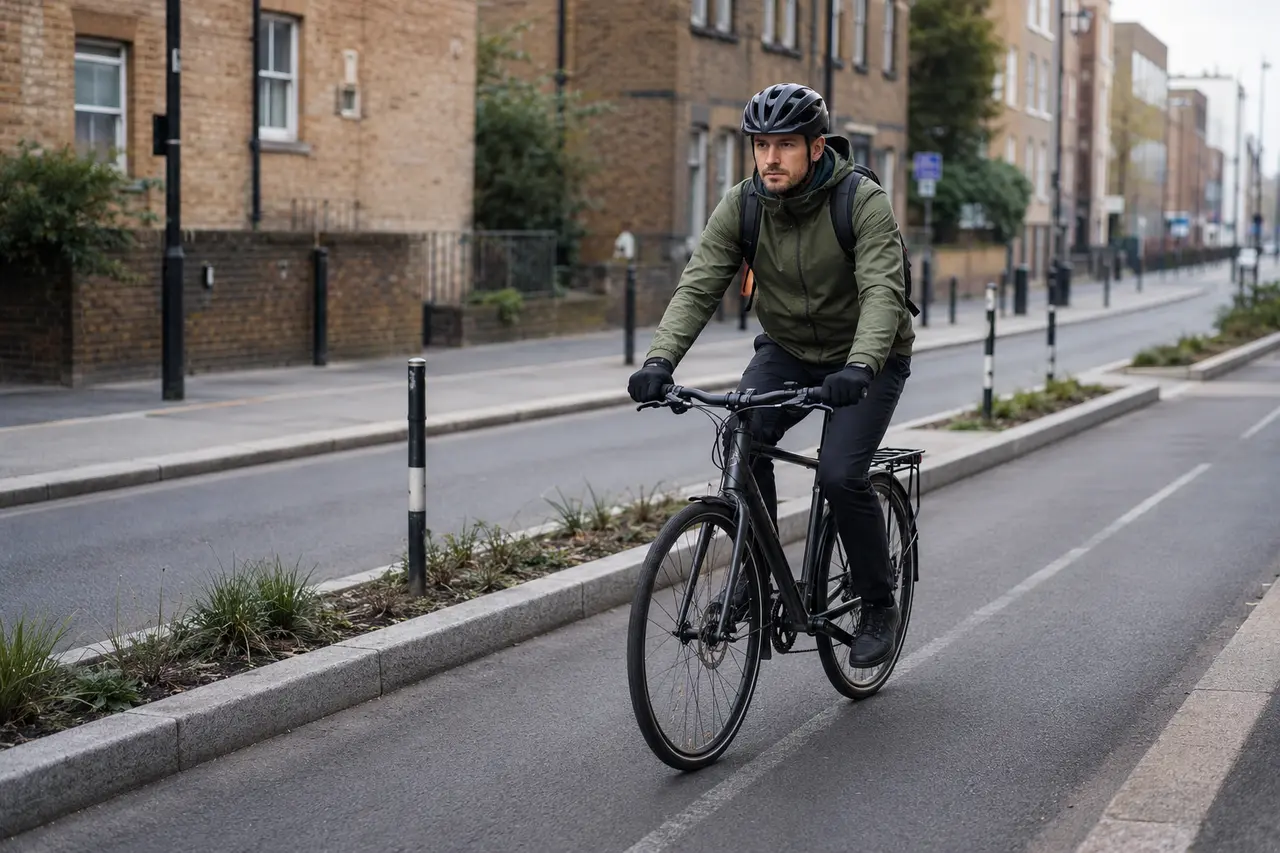
For many people, the biggest benefit is consistency: a regular ride is easier to maintain than exercise that needs a separate journey or booking. The commute can also be less affected by congestion on short urban routes.
- Regular moderate physical activity
- Potential savings on fares, fuel and parking
- More predictable travel time on suitable routes
- Lower direct emissions than a car journey
- A clearer sense of local streets and connections
The costs people forget
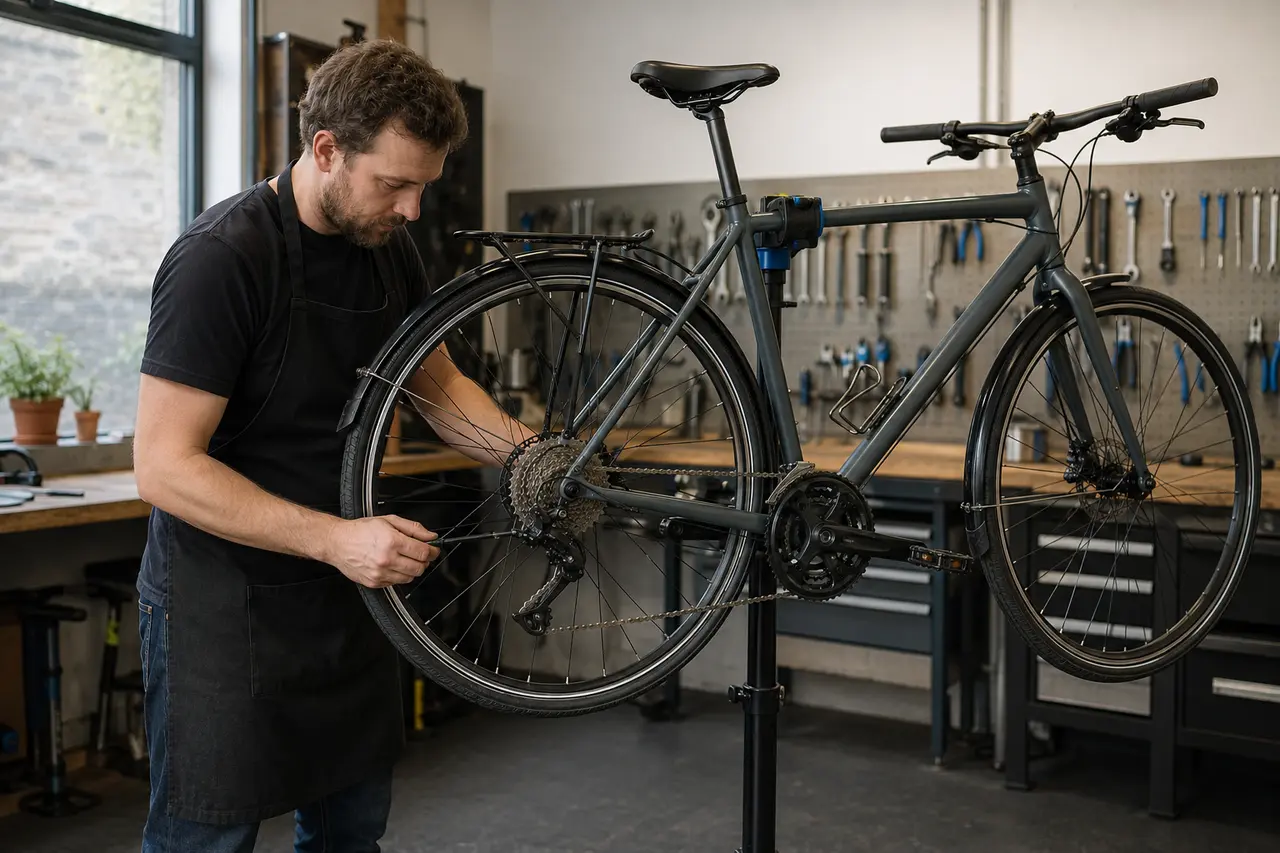
Allow for the bike, a secure lock, lights, weather protection and occasional replacement of tyres, brake pads and chains. If the route is long, secure storage and showers may matter more than the bicycle itself.
A low-risk way to start
- 1
Plan a quieter route rather than copying the car route.
- 2
Ride it once outside rush hour.
- 3
Prepare lights, lock, clothing and a puncture kit the night before.
- 4
Begin with an easy frequency and add days only when the routine works.
- 5
Review the route after dark and in wet weather before relying on it year-round.
Make the journey repeatable
Test the complete door-to-door journey outside rush hour before relying on it. Check difficult junctions, surfaces, gradients, cycle parking and the return direction, which may use different one-way streets or feel very different after dark. A slightly longer route through calmer streets can be easier to repeat than the line a car would take.
Prepare lights, lock, clothing and luggage the night before. Start with one or two predictable rides each week and keep a backup travel option for severe weather, illness or a mechanical problem. Cycling to work does not need to be an all-or-nothing promise.
Review the routine, not just speed
Time locking up, removing lights, storing wet kit and changing clothes as part of the commute. If the routine fails, identify the single biggest source of friction: an unpleasant junction, nowhere secure to leave the bicycle, an overloaded backpack or no place for wet clothing.
Change one thing at a time and assess it over several journeys. Route choice, reliable tyres, full mudguards or leaving shoes at work often improves consistency more than a faster bicycle or specialist clothing.
Check the current guidance
Rules, schemes and product ranges can change. These live links are the authoritative or independent starting points used for this guide.