The short version
- Your employer must offer or join a scheme
- Read the hire and end-of-term terms
- Savings vary by tax position
- Confirm which equipment is eligible
How it usually works
- 1
The employer selects or operates a scheme.
- 2
The employee chooses an eligible bicycle and/or safety equipment.
- 3
The employer provides the equipment under the scheme's agreement.
- 4
Payments may be taken from gross salary where salary sacrifice is used.
- 5
The scheme explains what happens at the end of the initial hire period.
Questions to ask before signing
Do not rely on a generic percentage saving. Ask the provider or payroll team for an illustration based on your salary and the exact agreement.
- Who owns the bicycle during the agreement?
- What happens if employment ends?
- Which retailers and products are eligible?
- How is any end-of-term transfer handled?
- Will salary sacrifice affect other pay-linked benefits?
Authoritative guidance
The government publishes implementation guidance for employers and HMRC material on the tax exemption. Scheme-provider marketing may simplify the position, so use the official material for the underlying rules.
Make the journey repeatable
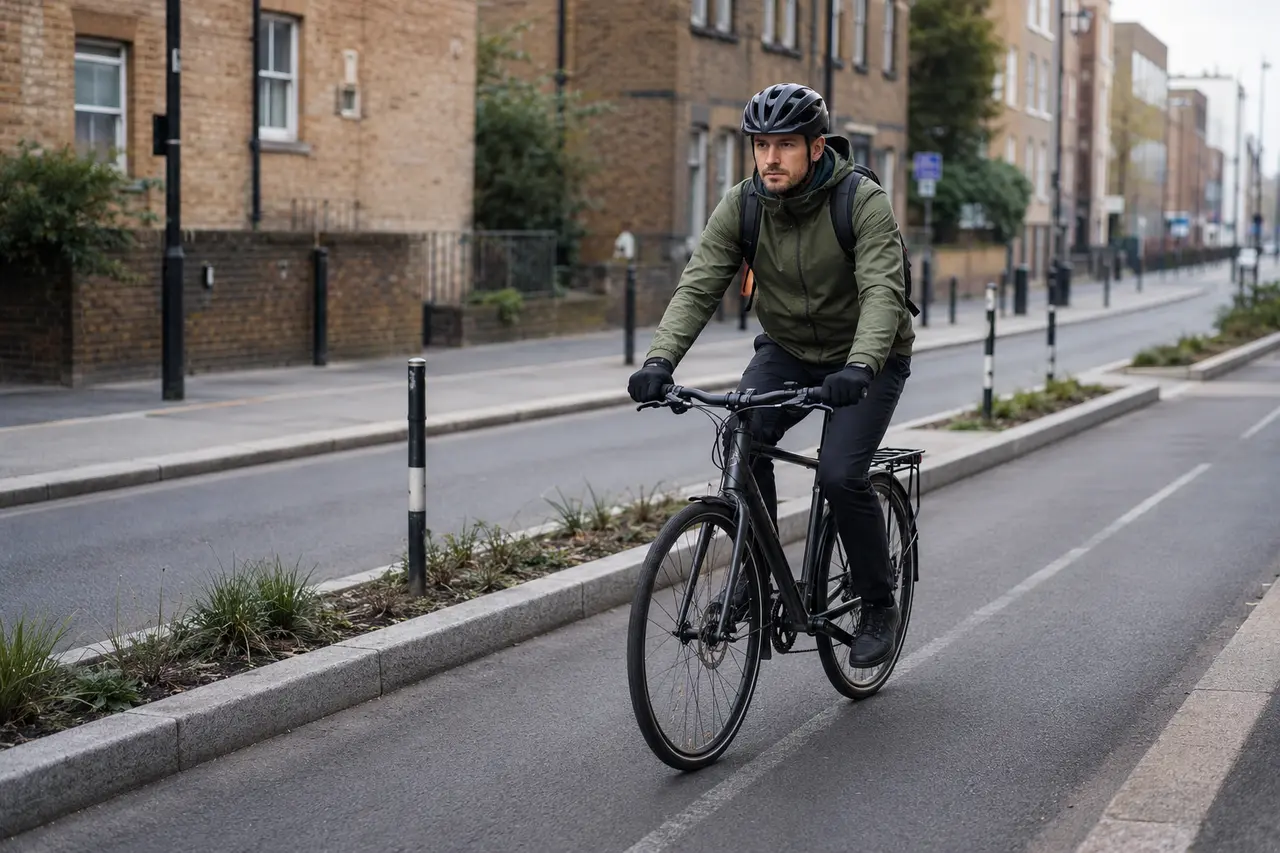
Test the complete door-to-door journey outside rush hour before relying on it. Check difficult junctions, surfaces, gradients, cycle parking and the return direction, which may use different one-way streets or feel very different after dark. A slightly longer route through calmer streets can be easier to repeat than the line a car would take.
Prepare lights, lock, clothing and luggage the night before. Start with one or two predictable rides each week and keep a backup travel option for severe weather, illness or a mechanical problem. Cycling to work does not need to be an all-or-nothing promise.
Review the routine, not just speed
Time locking up, removing lights, storing wet kit and changing clothes as part of the commute. If the routine fails, identify the single biggest source of friction: an unpleasant junction, nowhere secure to leave the bicycle, an overloaded backpack or no place for wet clothing.
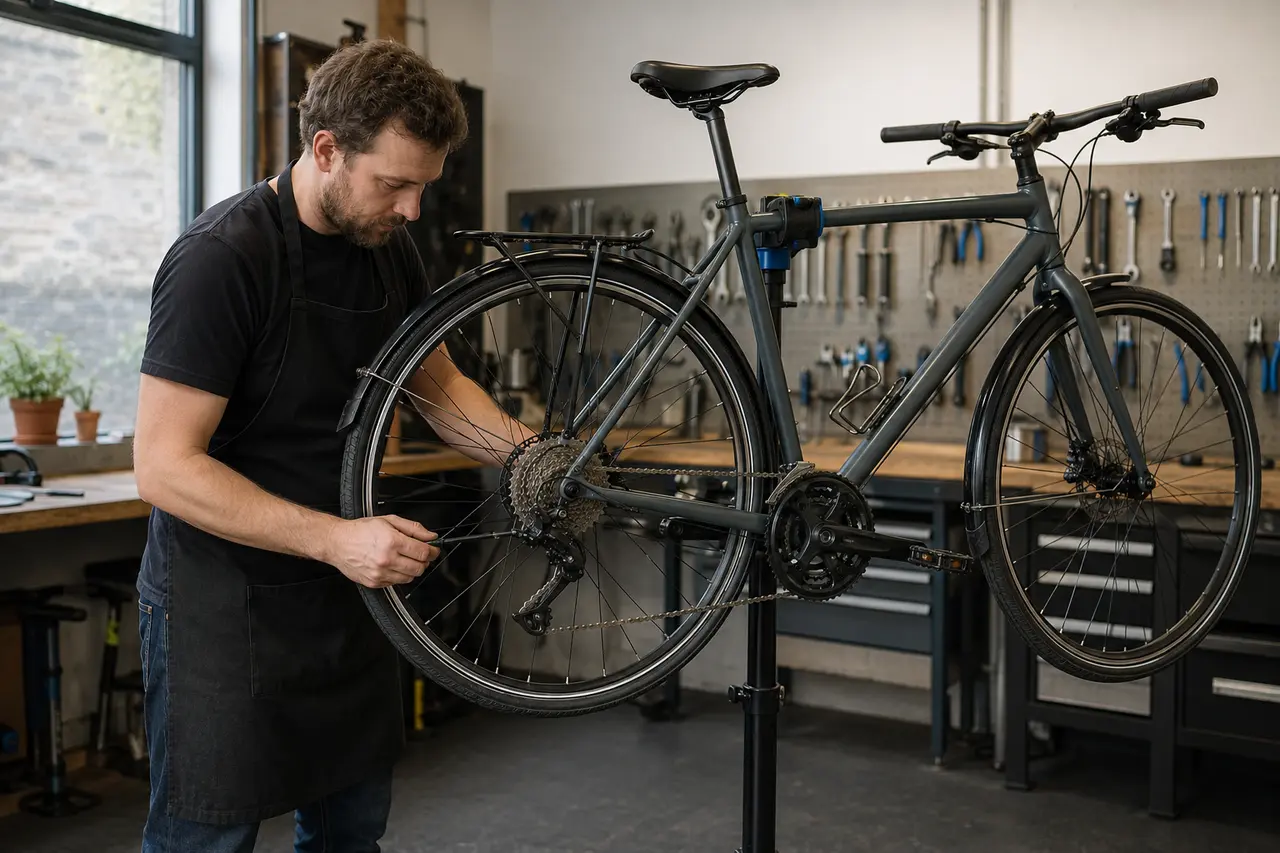
Change one thing at a time and assess it over several journeys. Route choice, reliable tyres, full mudguards or leaving shoes at work often improves consistency more than a faster bicycle or specialist clothing.
Check the current guidance
Rules, schemes and product ranges can change. These live links are the authoritative or independent starting points used for this guide.