The short version
- Build duration gradually
- Use the talk test to judge moderate effort
- Eat and recover normally
- Seek medical advice if health concerns affect exercise
What cycling trains
Pedalling mainly loads the quadriceps, glutes, hamstrings and calves, while the trunk and upper body stabilise the rider. The most important adaptation for everyday health is aerobic: the heart, lungs and muscles become better at sustaining activity.

How hard should a commute feel?
At a moderate intensity you should breathe faster and feel warmer but still be able to talk. New riders can begin with a pace that feels deliberately easy, then add time or distance before adding intensity.
- Easy: comfortable conversation
- Moderate: talk but not sing
- Hard: only a few words at a time
Warm-up and recovery
For most easy commutes, the first few minutes of gentle pedalling provide a practical warm-up. Start in an easy gear and avoid sprinting away from the first junction. After the ride, keep moving briefly, eat normally and allow sore or unusually tired muscles to recover.
Make the journey repeatable
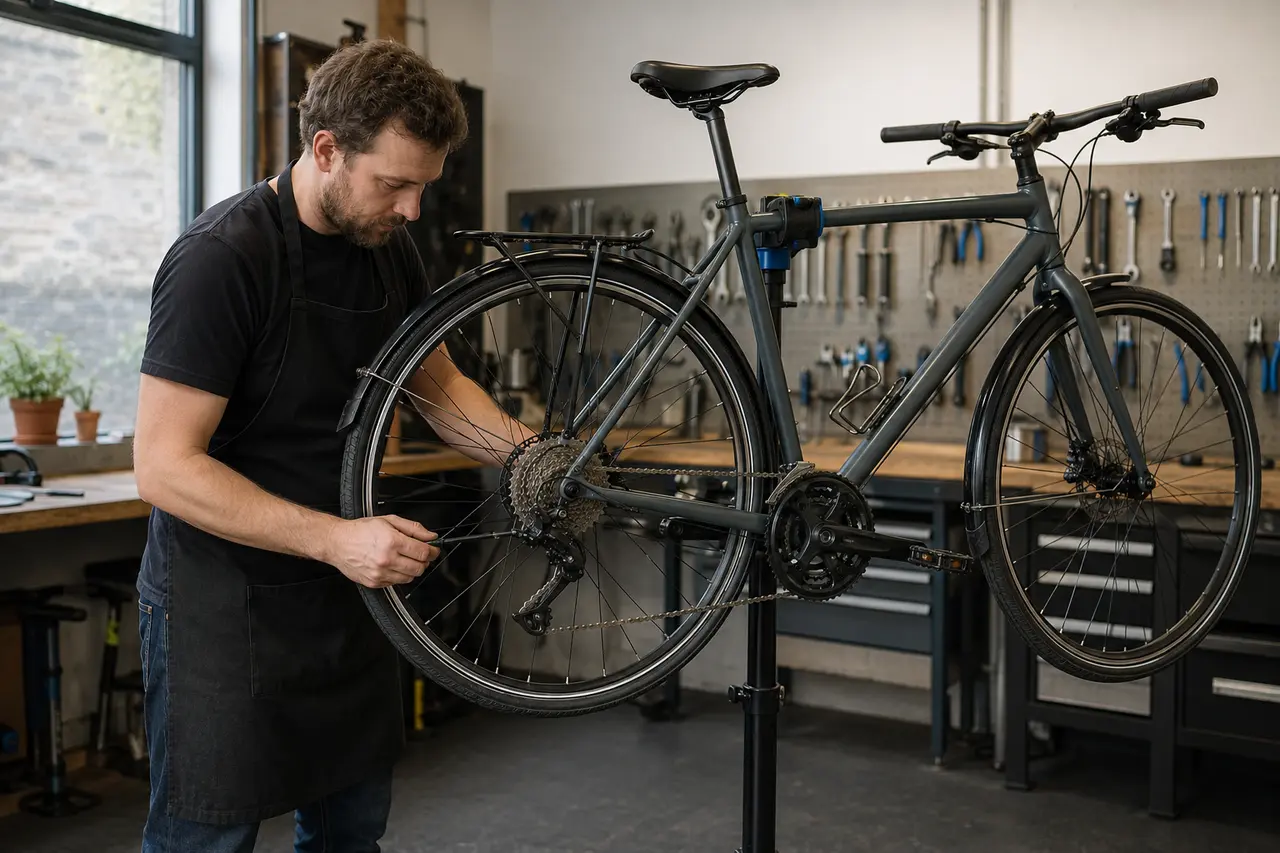
Test the complete door-to-door journey outside rush hour before relying on it. Check difficult junctions, surfaces, gradients, cycle parking and the return direction, which may use different one-way streets or feel very different after dark. A slightly longer route through calmer streets can be easier to repeat than the line a car would take.
Prepare lights, lock, clothing and luggage the night before. Start with one or two predictable rides each week and keep a backup travel option for severe weather, illness or a mechanical problem. Cycling to work does not need to be an all-or-nothing promise.
Review the routine, not just speed
Time locking up, removing lights, storing wet kit and changing clothes as part of the commute. If the routine fails, identify the single biggest source of friction: an unpleasant junction, nowhere secure to leave the bicycle, an overloaded backpack or no place for wet clothing.
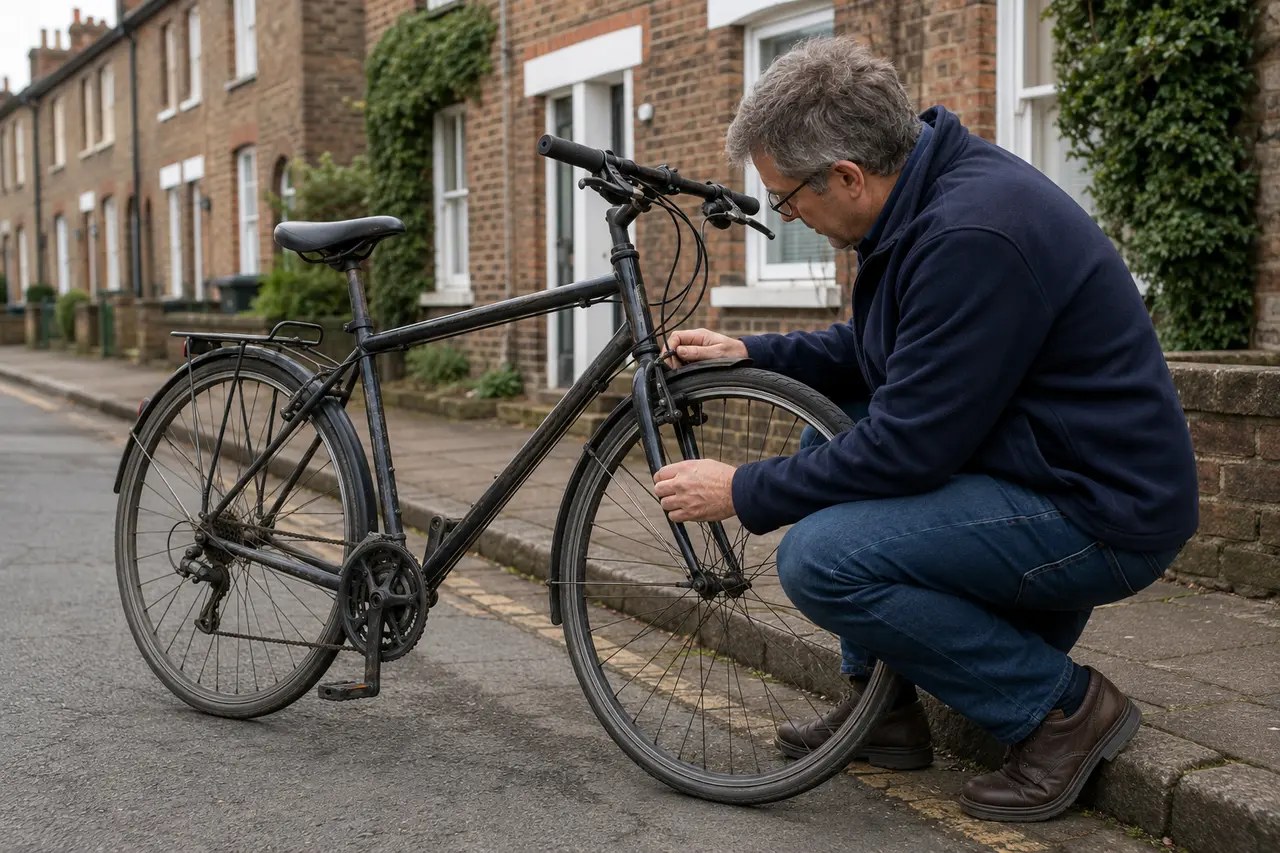
Change one thing at a time and assess it over several journeys. Route choice, reliable tyres, full mudguards or leaving shoes at work often improves consistency more than a faster bicycle or specialist clothing.
Check the current guidance
Rules, schemes and product ranges can change. These live links are the authoritative or independent starting points used for this guide.