The short version
- Fit full-length mudguards
- Use lights in poor visibility
- Pack dry work clothes separately
- Allow more braking distance
Build a simple wet-weather system
- 1
Start with a breathable base layer.
- 2
Add an insulating layer only when the temperature needs it.
- 3
Use a windproof or waterproof outer that can vent.
- 4
Protect legs and feet when rain is sustained.
- 5
Put clothes and electronics inside a dry bag or sealed liner.
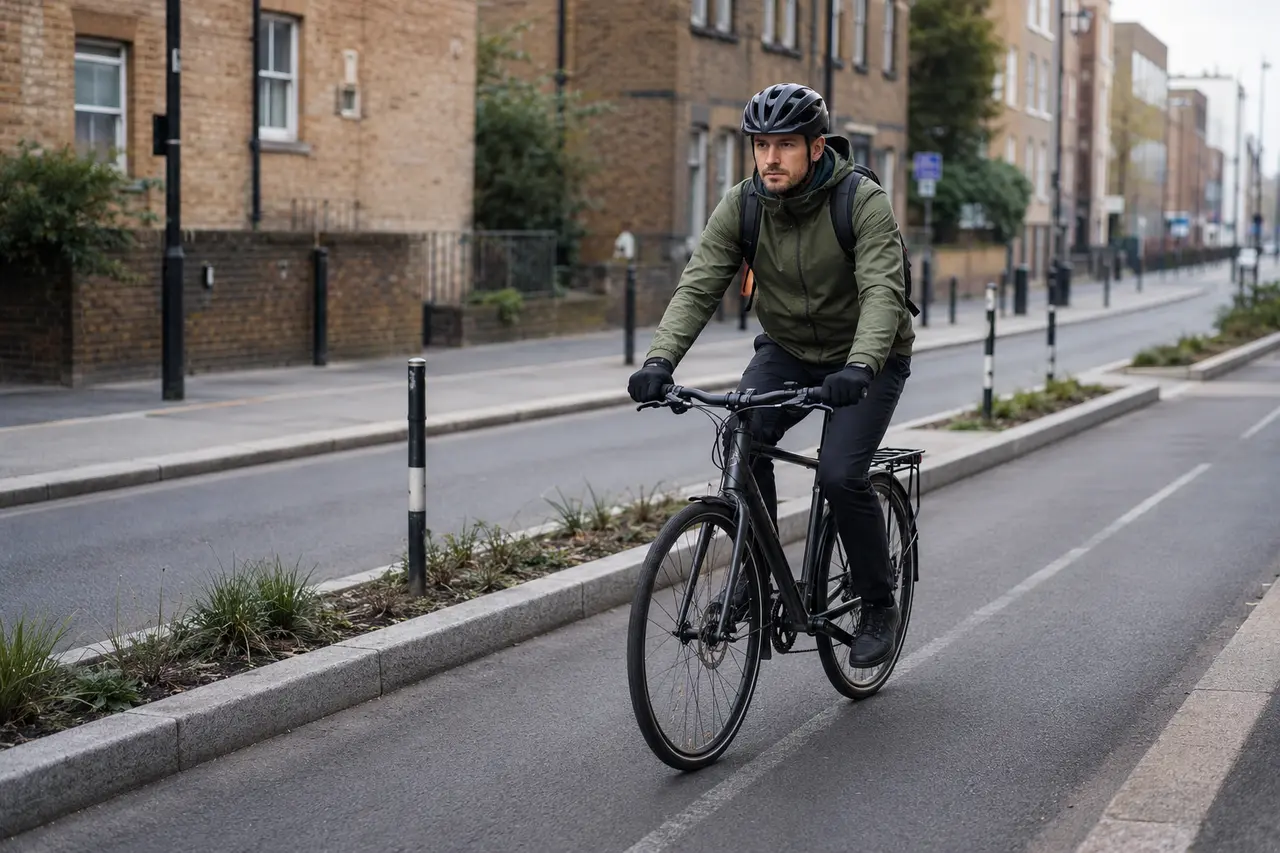
Ride for the reduced grip
Painted markings, metal covers, leaves and smooth surfaces can become slippery. Brake earlier and more progressively, keep the bike more upright through corners and avoid sudden steering inputs.
Weather resistance is not all-or-nothing
Water-resistant kit can be enough for showers and short journeys. For documents, electronics or a full change of clothes, use a properly waterproof bag with sealed seams and a roll-top or protected closure.
Breathability matters for clothing. A completely impermeable layer may stop rain but still leave you damp from perspiration. Venting, fit and the ability to add or remove a layer are often more useful than a laboratory waterproof rating alone.
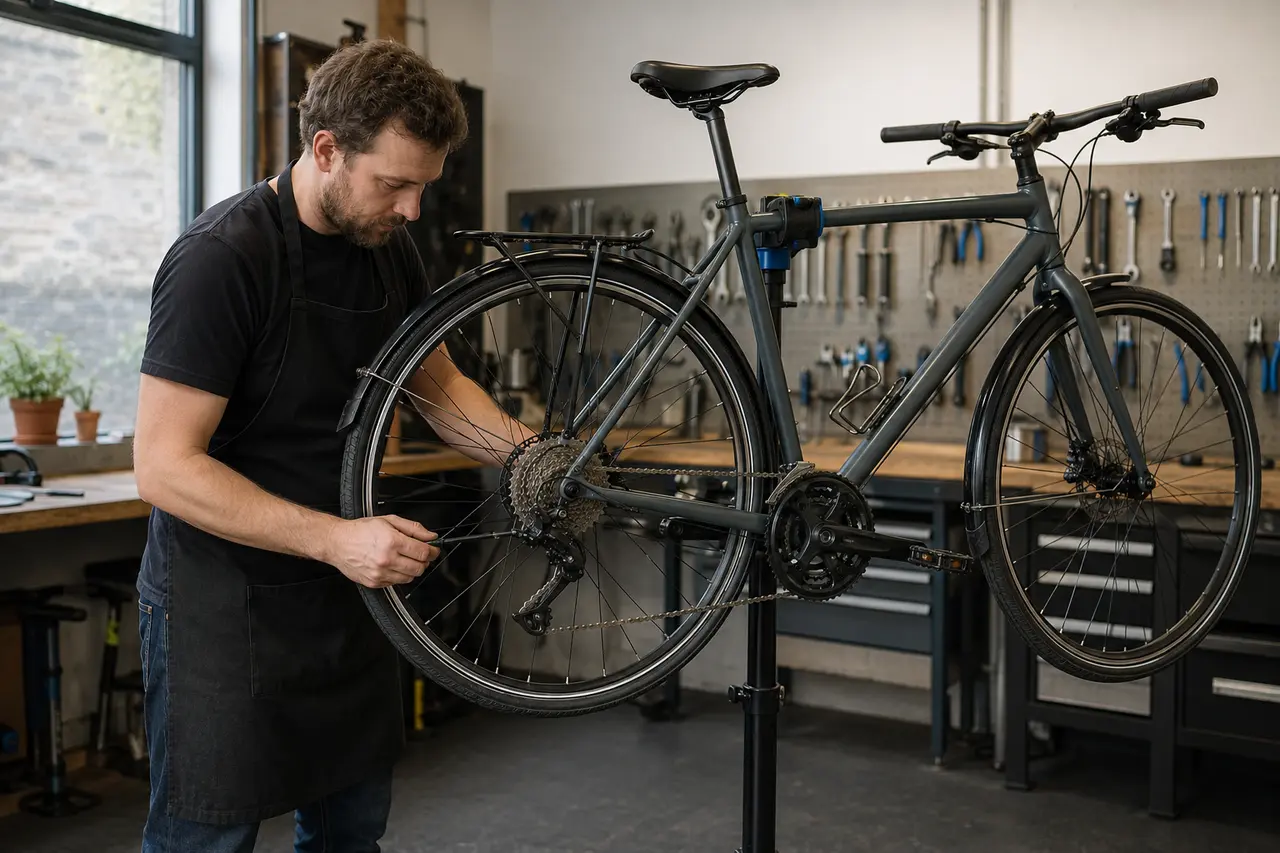
Look after it and it will keep working
Road grit, salt and repeated wet rides are hard on commuting equipment. Wipe down fittings, check fasteners and let wet kit dry fully. Inspect straps, hooks and reflective panels before they fail on the road.
Choose equipment for a recurring problem
Start with compatibility and the conditions you actually ride in. A product earns its place when it is easy to fit, simple to use every day and available in the size or standard your bicycle needs. Marketing labels such as waterproof, commuter or universal do not replace measurements, construction details and a realistic understanding of the journey.
Check straps, hooks, fasteners and reflective details regularly. Nothing should be able to enter a wheel, touch a brake, obscure a light or catch a foot. Add luggage weight gradually and observe the lowest limit stated by the frame, rack, basket or bag maker.
Care, replacement and value
Road grit, salt, ultraviolet light and repeated wet rides shorten the life of commuting equipment. Let wet items dry fully, wash clothing according to its label and inspect high-wear attachment points before they fail. Replacement parts and repairable fittings can matter more than a small saving at purchase.
Compare the whole ownership cost, including required mounts, batteries, liners and replacement consumables. An older product can remain useful when it is compatible and in sound condition, but an archived discount or review score is not evidence of current value.
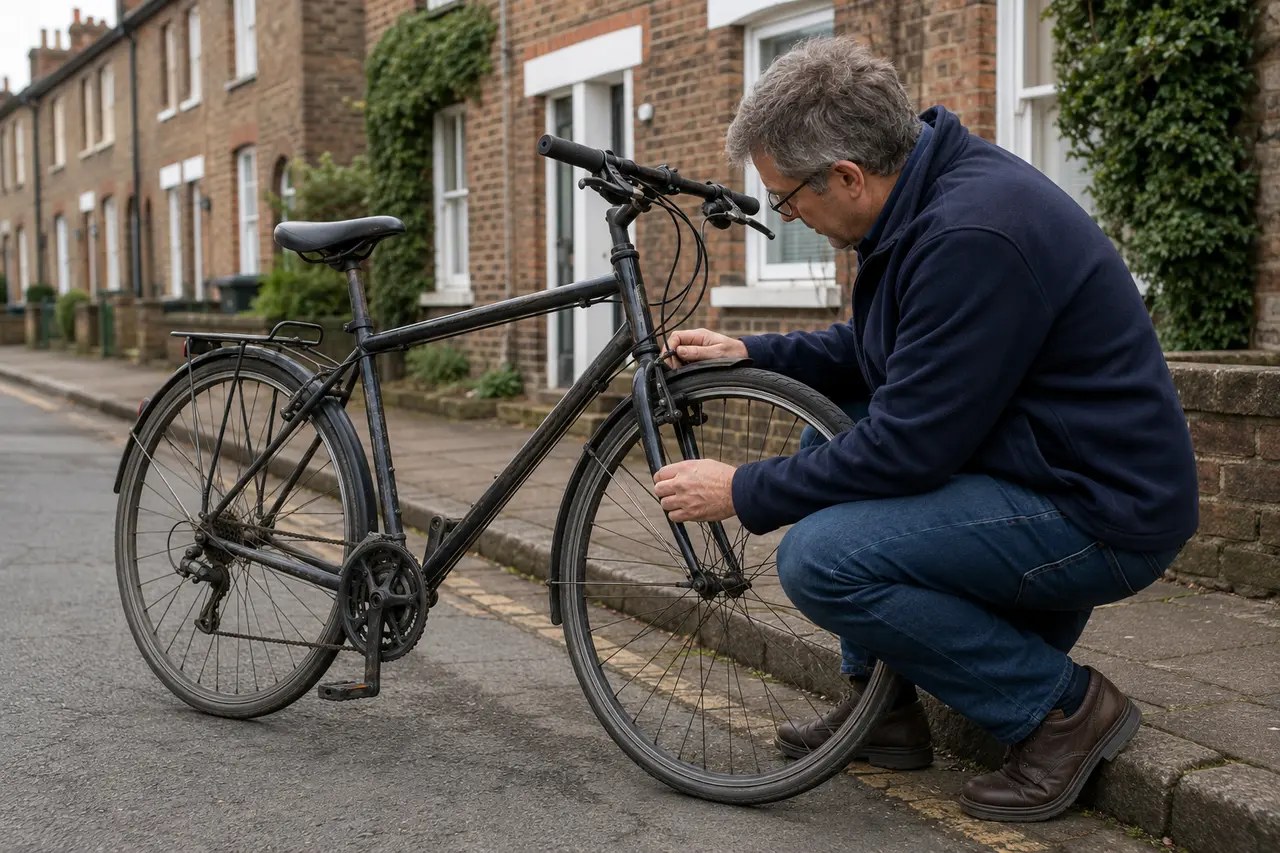
Check the current guidance
Rules, schemes and product ranges can change. These live links are the authoritative or independent starting points used for this guide.