The short version
- Hybrid models suit practical commuting
- Road models prioritise speed
- Gravel models add tyre clearance and versatility
- Compare fit and service access, not just specification
Which Boardman family suits you?
The exact letters and model tiers can change. Treat them as a starting point, then confirm the current specification and available frame sizes with the retailer or manufacturer.
- HYB and urban-style bikes: flat bars and efficient commuting
- SLR road bikes: faster road riding and longer distances
- ADV gravel bikes: mixed surfaces, luggage and all-season riding
- MTR or hardtail mountain bikes: trail-focused riding
- Electric models: assistance for distance, hills or carrying loads
Start with the journey, not the bike
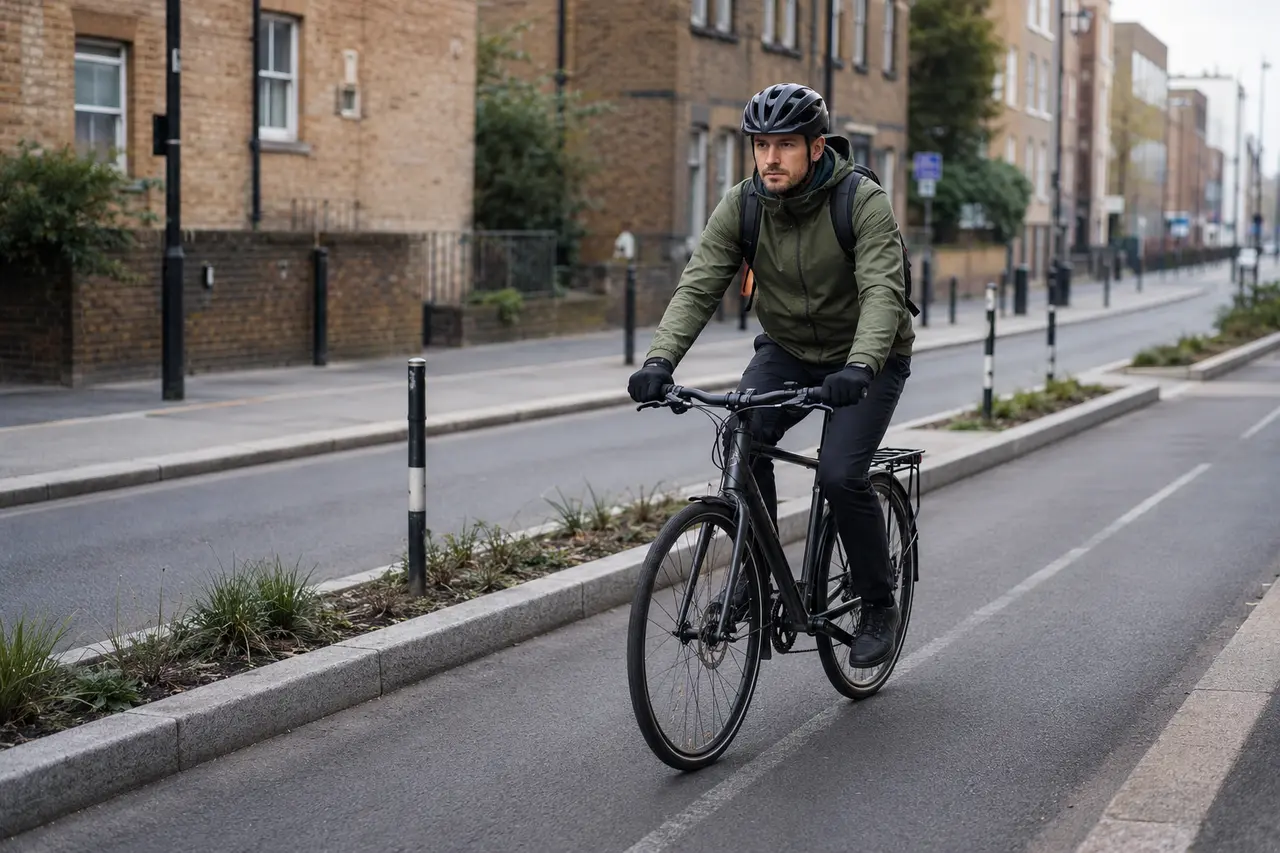
A good commuter bike is the one that removes friction from the journey you actually make. Distance, hills, road surface, storage and what you carry matter more than the label on the down tube.
For a short, fairly flat ride, an upright city bike or simple hybrid can be ideal. Longer or hillier journeys reward lower weight, efficient tyres and a useful spread of gears. If a train forms part of the trip, folding speed and folded size may be more important than outright pace.
- Mostly tarmac: hybrid, flat-bar road bike or road bike
- Broken surfaces and towpaths: hybrid with wider tyres or a rigid mountain bike
- Bike and train: folding bike
- Very hilly route: broad gearing and reliable brakes
- Limited indoor storage: compact or folding bike
The details that matter every day
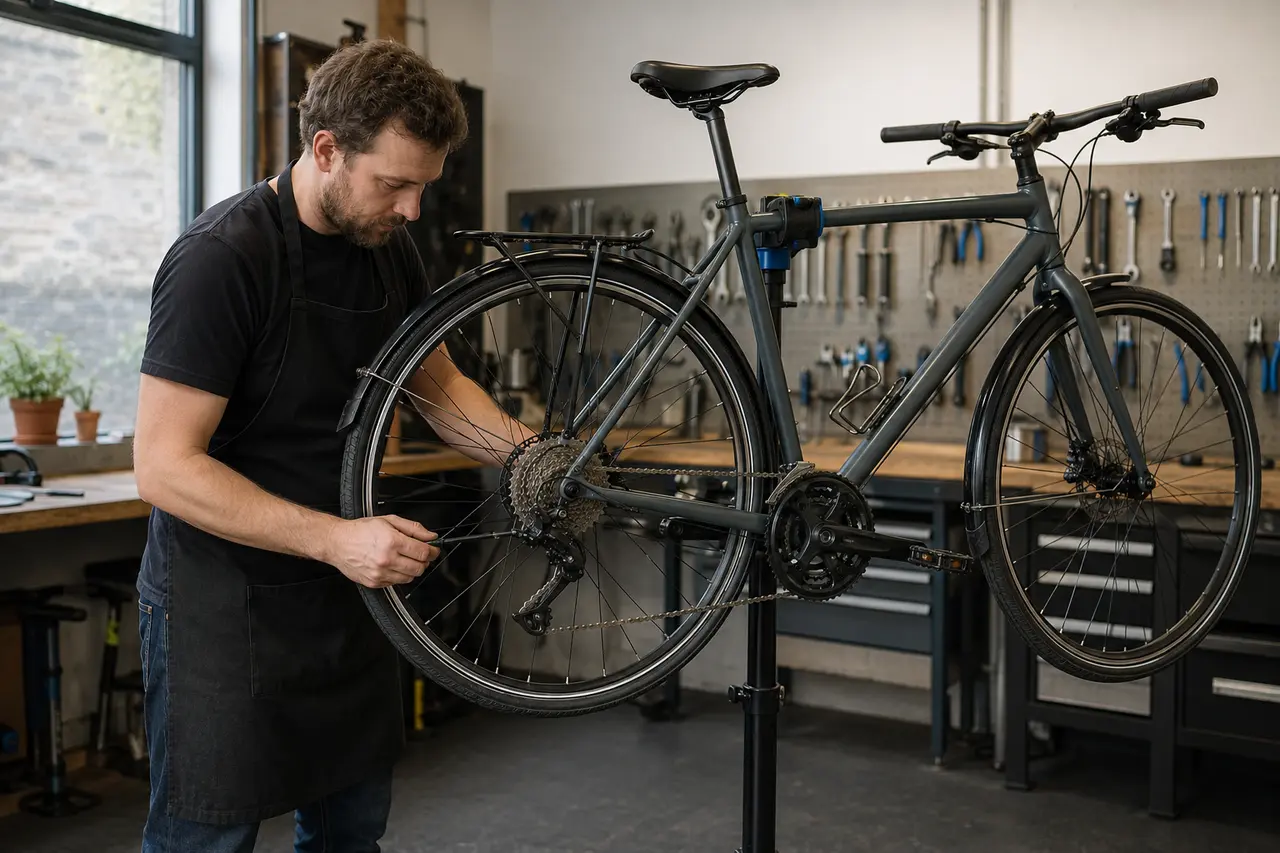
Mounts for full-length mudguards and a rear rack make a commuter much more useful. Tyre clearance matters too: a little extra volume improves comfort and gives you more choice when replacing worn tyres.
Disc brakes can offer consistent wet-weather braking, while rim brakes remain simple, inexpensive and perfectly serviceable when maintained. Neither system compensates for worn pads, damaged cables or poor setup.
- Correct frame size and a comfortable reach
- Tyres suited to the road surface
- Gearing low enough for the steepest regular climb
- Rack and mudguard mounting points
- Parts that a local shop can readily service
Budget for the whole setup
Keep part of the budget for a lock, lights, mudguards and a way to carry your things. A cheaper bike equipped properly is usually a better commuter than a more expensive bare bike that leaves you wet, overloaded or worried about theft.
If buying used, allow for an initial service and consumable parts. Tyres, brake pads, a chain and cables can turn an apparent bargain into an ordinary-priced bike, but that can still be worthwhile if the frame, wheels and fit are right.
Fit and specification checks
Treat a model name as the start of the comparison, not the decision. Confirm frame size, reach, tyre clearance, gearing, brake type and mounting points on the actual bicycle. Specifications can change within a range or model year, and replacement parts fitted by a previous owner may alter both performance and maintenance needs.
A useful test ride includes a small climb, several gear changes, a firm controlled stop and a tight low-speed turn. Hands should reach the brake controls comfortably and the rider should not feel excessively stretched or cramped. Accessories can refine a broadly correct fit, but they cannot rescue a frame that is fundamentally the wrong size.
Budget for the complete bicycle
Compare the equipped cost rather than the bare-bike price. Lights, a suitable lock, mudguards, luggage and an initial service can matter more to daily usefulness than a higher component tier. For a used bike, price tyres, chain, brake pads, cables and any wheel work before deciding that the asking price is a bargain.
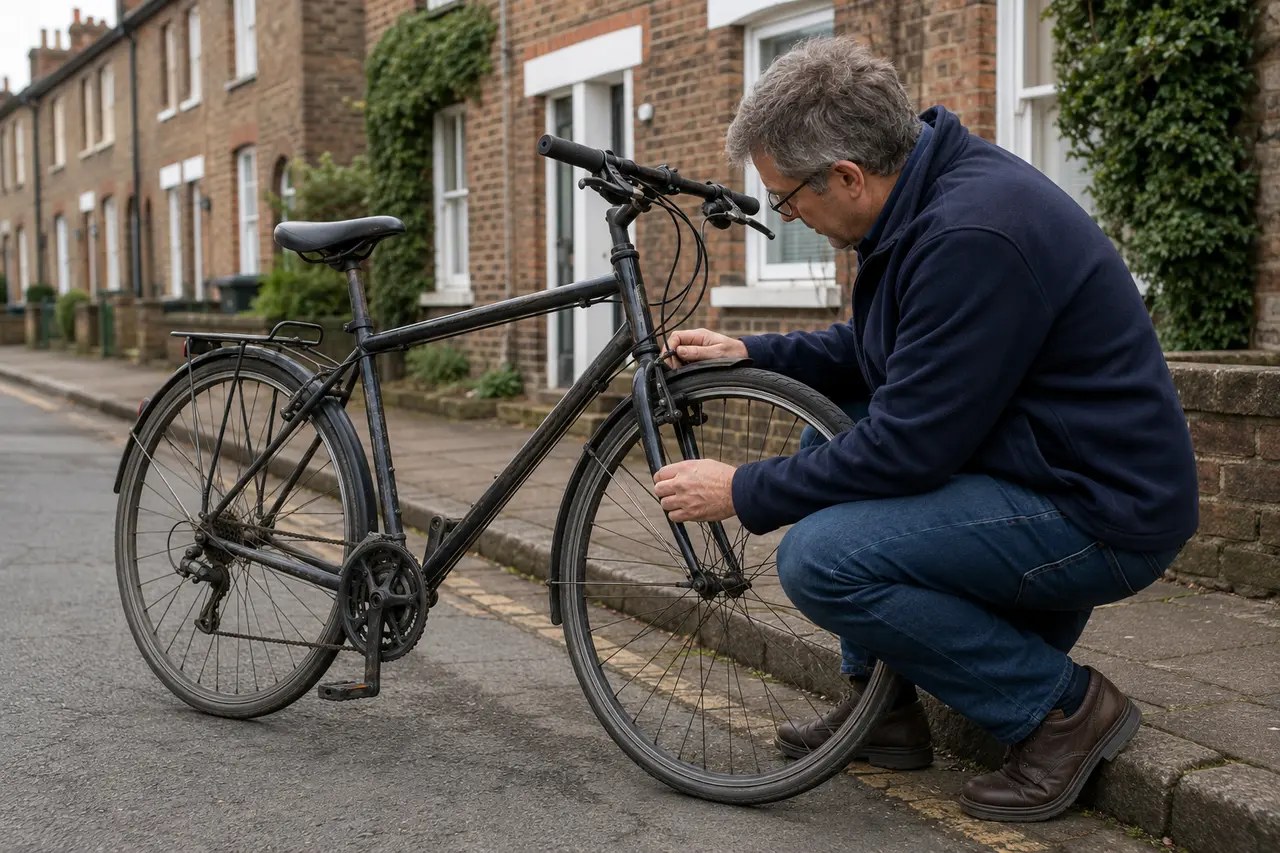
Keep the frame number and a receipt, ask for ownership history and walk away if the seller cannot explain the bicycle's identity. Damage to a frame, fork, folding hinge or obsolete proprietary component is more significant than worn consumable parts that a local shop can readily replace.
Check the current guidance
Rules, schemes and product ranges can change. These live links are the authoritative or independent starting points used for this guide.